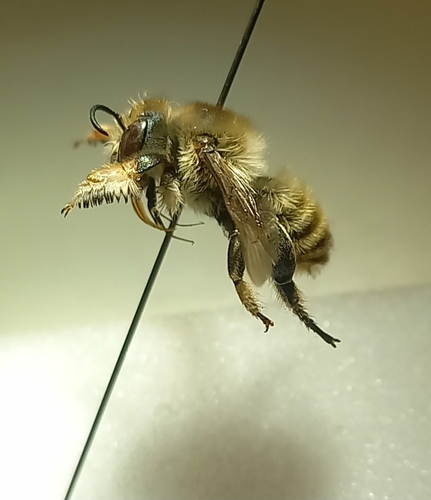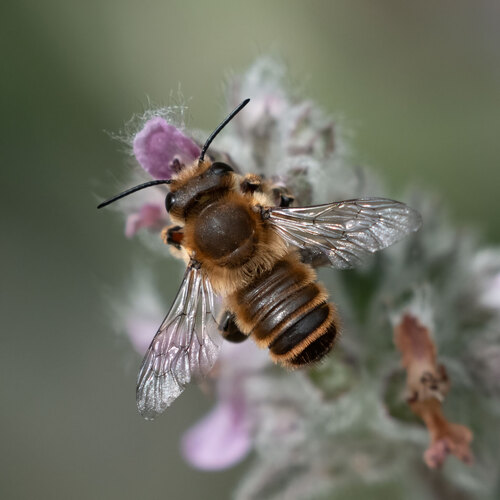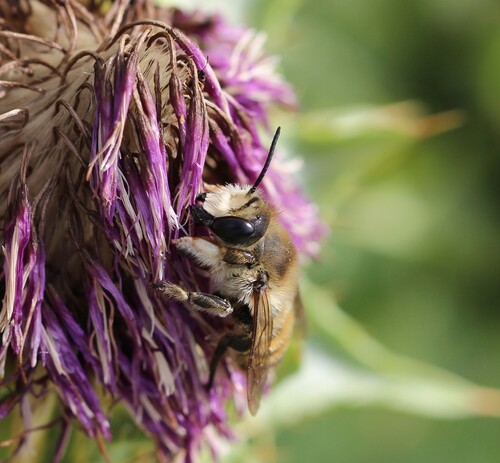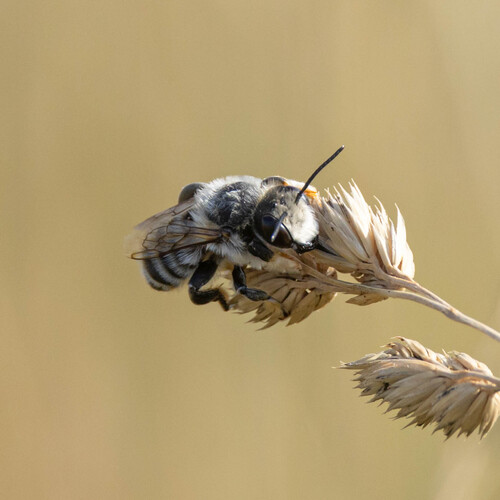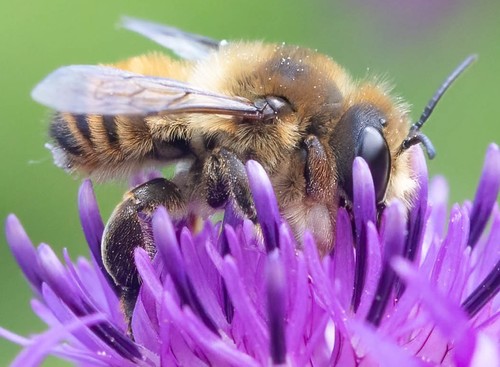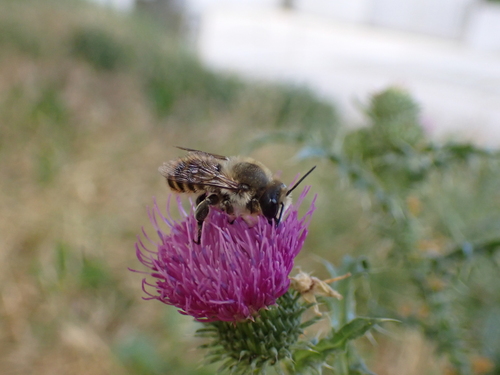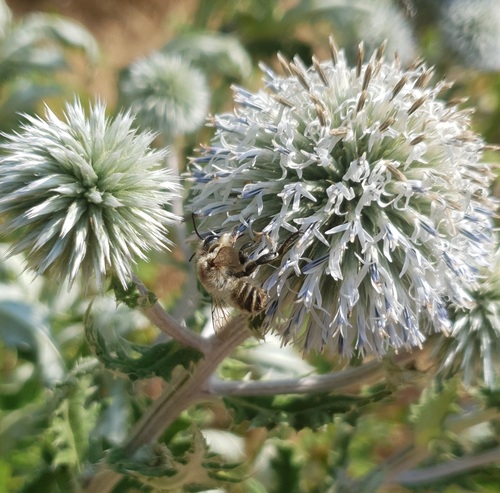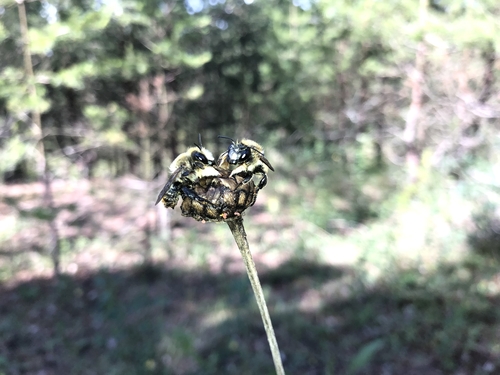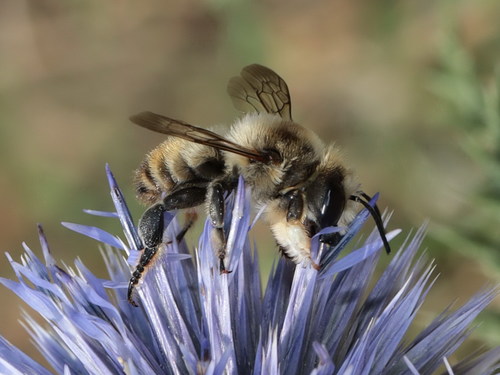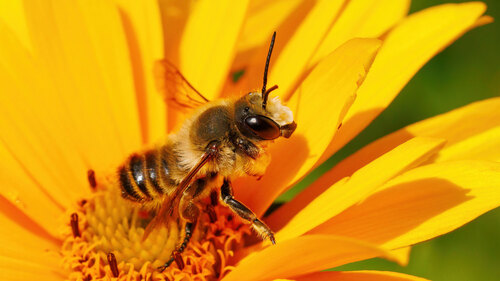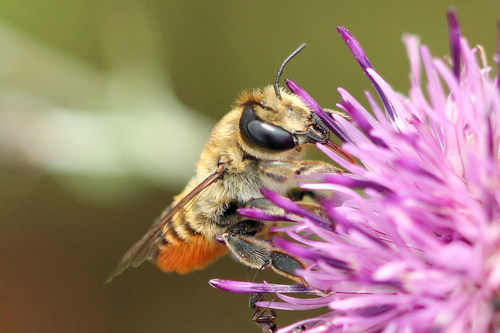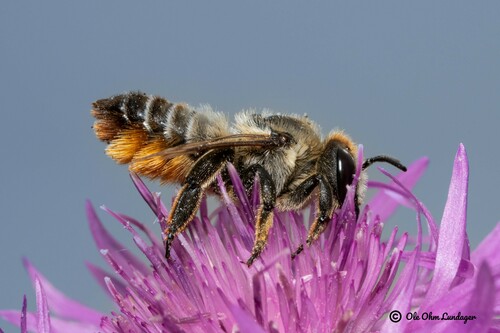
hairy-footed leafcutter bee - Megachile lagopoda (Linnaeus, 1761)
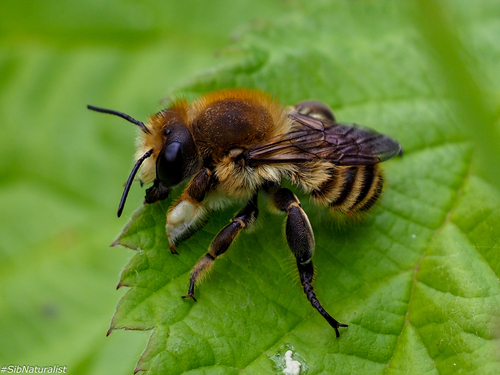
Source: Wikipedia
Synonyms 11
- 5,837 GBIF occurrences
- 959 iNaturalist observations
The species is listed in the National Red Lists or Red Data Books of Belgium (Critically Endangered; Drossart et al., 2019), Czechia (Endangered; Hejda et al. 2017), Estonia (Vulnerable; Soon 2020), Finland (Near Threatened; Hyvärinen et al. 2019), Germany (Endangered; Westrich et al. 2011), Norway (Critically Endangered; Artsdatabanken 2021) and Sweden (Near Threatened; SLU Artdatabanken, 2020).The species was, before 2014, listed in the National Red Lists or Red Data Books of Switzerland (Critically Endangered; Amiet 1994), Germany of 1998 (Endangered; Westrich et al. 2011), Finland (Near Threatened; Rassi et al. 2010), Norway (Critically Endangered; Kålås et al. 2010) and Sweden (Vulnerable; Gärdenfors 2010).It is likely to occur within some protected areas due to its wide distribution. Further research should be conducted to determine the population size, trends and threats to the species.
This species nests in underground excavated or pre-existing burrows, cavities or under rocks, with cells made of leaf discs (Westrich 1989, Gogala 2013). It is host of the cuckoo bee Coelioxys conoidea (C. Praz pers. comm. 2014). Megachile lagopoda is polylectic (Westrich 1989), in that it forages upon a wide variety of plant species (polylectic), mainly on Asteraceae and Fabaceae (Westrich 1990, Praz 2017). It inhabits open habitats with abundant host-plants, including grasslands and shrublands. This species is found in places with sufficient resources and possible nesting places; this may concern rocky beaches, quarries, industrial wastelands, dry and warm slopes (Praz 2017). It is a thermophilic species. In central Europe, it is found mostly in dry grasslands. The species is univoltine (the species has one generation per year) and it flies from July to September (Gogala 2013). Males can be seen from mid-May to the end of August and females from the end of June to the end of August (Amiet et al. 2004).
The population trend is unknown, although populations are presumed to be abundant.
This bee species is assessed as Least Concern as this is a common species and in view of its widespread distribution and presumably large populations. However, research should be conducted on the population size, trends and threats in order to determine the status of this species throughout its range, as it is considered threatened in certain European countries.
The threats to this species are not known.